
3 hr
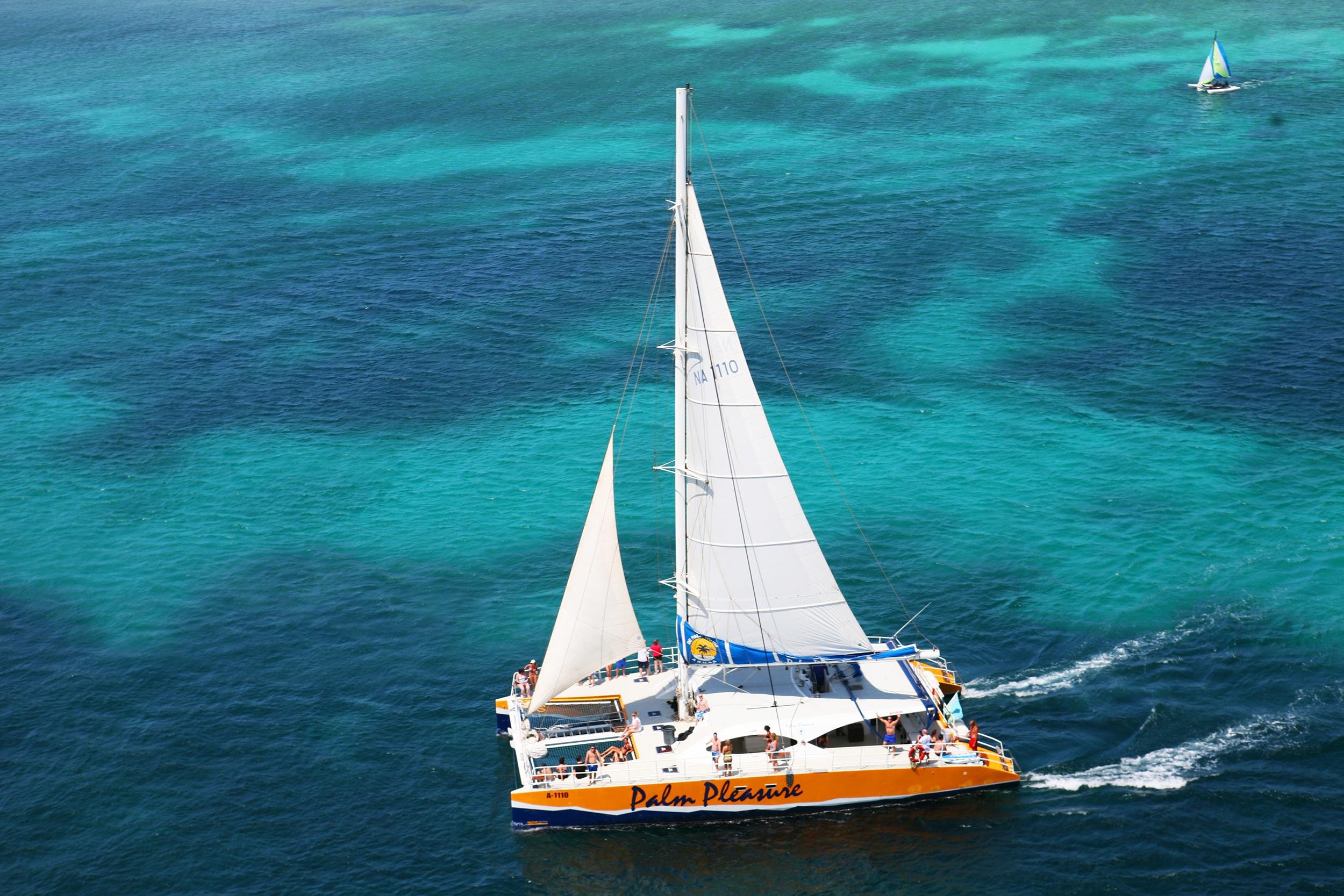
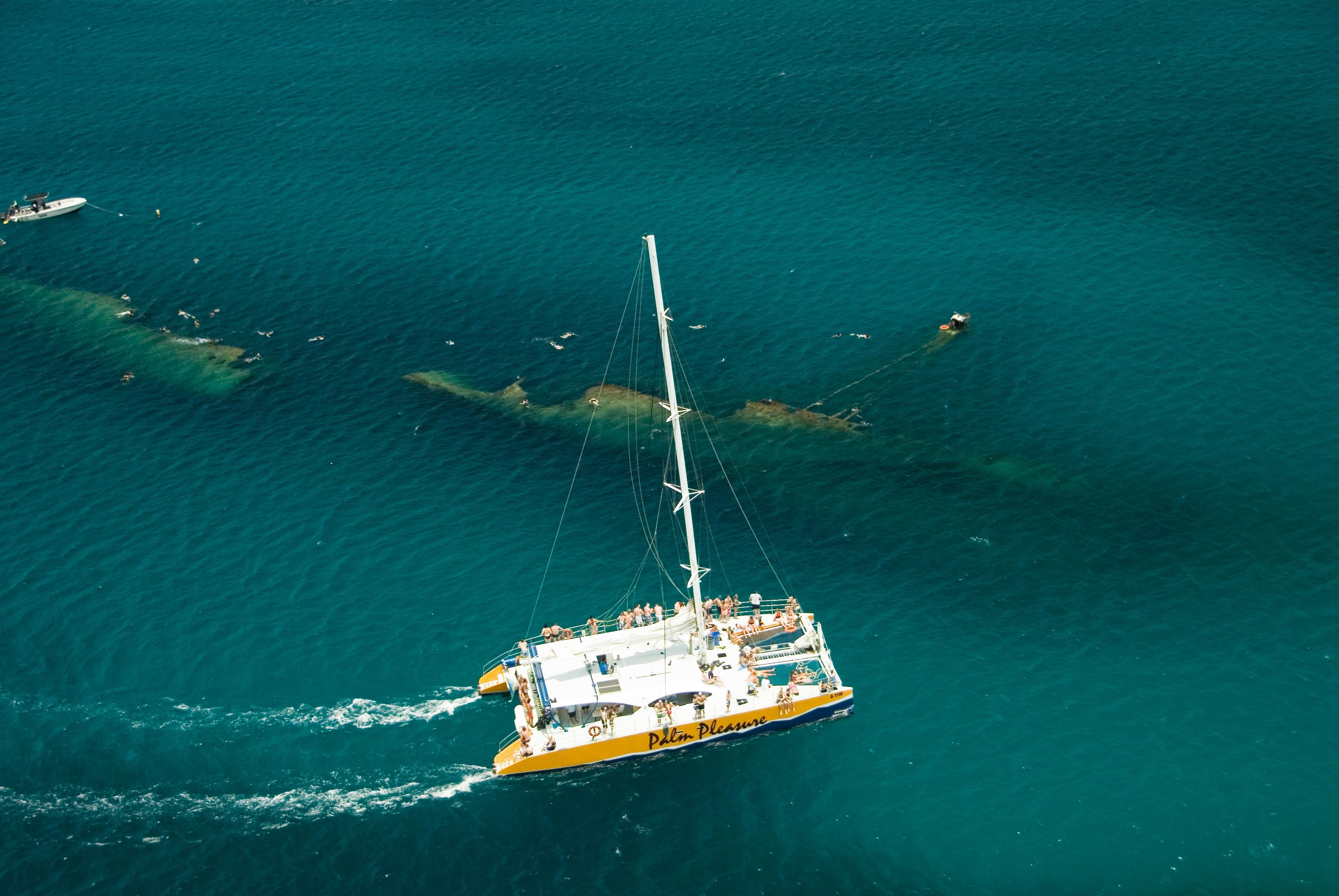
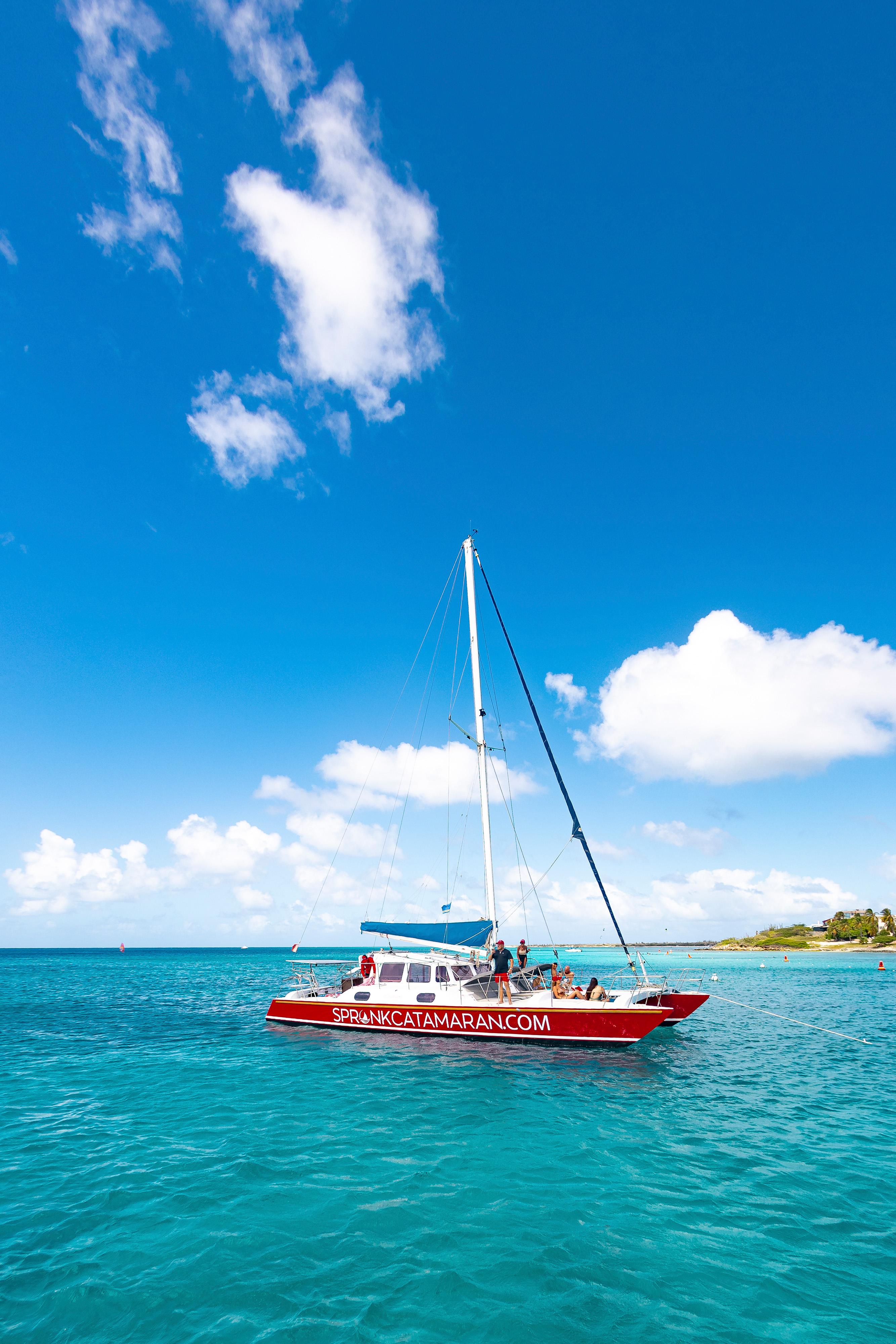
Aruba Caribbean Snorkel Sail with Open Bar
- Entry ticket
- Mobile voucher
- Valid same day
- Free cancellation
Aruba Antilla Shipwreck Snorkel — Caribbean Wreck Tours
Explore the Caribbean's largest accessible wreck, eighty years beneath Malmok Bay
Compare fares, pick the fit — all bookings are mobile-voucher and eligible for free cancellation where shown.
3 hr
3 hr
3 hr
Exploring the aruba antilla shipwreck snorkel site is a highlights-driven experience that requires a boat-based excursion to reach the submerged WW2 vessel. Whether you prefer a relaxing catamaran sail or an high-speed motorized underwater adventure, these aruba antilla shipwreck snorkel tours provide the necessary gear and guidance to safely view the coral-encrusted wreck.
|
Top pick Catamaran Snorkel Sail Relaxed group tour |
Seabob Underwater Jet High-speed guided excursion | |
|---|---|---|
| Duration | 2.5 - 3 hours | 2.5 hours |
| Group Size | Medium to Large | Small / Semi-private |
| Activity Level | Moderate (swimming/snorkeling) | High (active jet propulsion) |
| Inclusions | Open bar, snorkel gear, snacks | Snorkel gear, Seabob jet, guide |
| Access Method | Boat tour required | Boat tour required |
| Best for | First-timers and social groups | Adventure seekers and enthusiasts |
| See tickets & prices |
Verdict: For the best balance of value and leisure, choose the catamaran option, or book the Seabob aruba antilla shipwreck snorkel tickets for a more active, personalized underwater perspective.
Worth it for history buffs and snorkelers
The Antilla shipwreck sits in shallow waters off Malmok Bay, accessible only through boat tours that bundle the wreck dive with other stops like turtle snorkeling and open bars. Most catamaran packages run 3–4 hours and cost between $60–$90 per person, making the aruba antilla shipwreck snorkel experience part of a broader Caribbean sailing itinerary rather than a standalone wreck dive. The German freighter rests at 60 feet but portions reach within 15 feet of the surface, allowing snorkelers to see coral-encrusted railings, portholes, and the hull's skeletal frame without scuba gear. Visibility peaks in morning departures before afternoon winds stir sediment. The wreck's historical significance—scuttled in 1940 to avoid Allied capture—adds narrative weight beyond the marine life colonizing the metal structure. Casual beachgoers expecting a quick shore entry will find the boat requirement and multi-stop format less appealing, but those combining snorkeling with WW2 history get solid value from the combined excursion format.
Bottom line: Book a morning aruba antilla shipwreck snorkel tour if you want Caribbean marine life wrapped around authentic wartime history.
The Antilla offers a dramatic, large-scale open-water experience, whereas the Pedernales provides a more sheltered, shallow dive for beginners; many visitors consider aruba antilla shipwreck snorkel tours the superior choice for sheer scale.
|
Top pick Antilla Wreck |
Pedernales Wreck | |
|---|---|---|
| Ship size | 400 feet (122 m) | 330 feet (100 m total fragments) |
| Submergence level | Partial surface exposure | 10 to 30 feet (3-9 m) |
| Marine life diversity | High (coral and tropical fish) | Moderate (small reef fish) |
| Snorkel accessibility | Moderate (boat access required) | High (very shallow depth) |
| Crowd density | High (popular catamaran stop) | Moderate (frequent boat stop) |
| Required skill level | Intermediate swimmer | Beginner friendly |
| See tickets & prices |
Verdict: Choose the aruba antilla shipwreck snorkel for a sprawling, immersive maritime landmark, or opt for the Pedernales if you prefer shallow waters and easier viewing through aruba antilla shipwreck snorkel tickets or local charters.
Hand-picked experiences loved by thousands of travelers
4.5 hours
Free Cancellation
Sail along Aruba's coast, snorkel with sea turtles, explore a WWII wreck, and feast on BBQ at sunset
4.5 hours
Free Cancellation
Half-day sailing trip exploring underwater wrecks, swimming with sea turtles, and beachside barbecue
5 hours
Free Cancellation
Discover Aruba's underwater treasures on a guided snorkeling journey to two pristine coastal locations
4.5 hours
Free Cancellation
Discover two stunning Caribbean beaches with snorkeling gear, guide, and hotel transfers included
4 hours
Free Cancellation
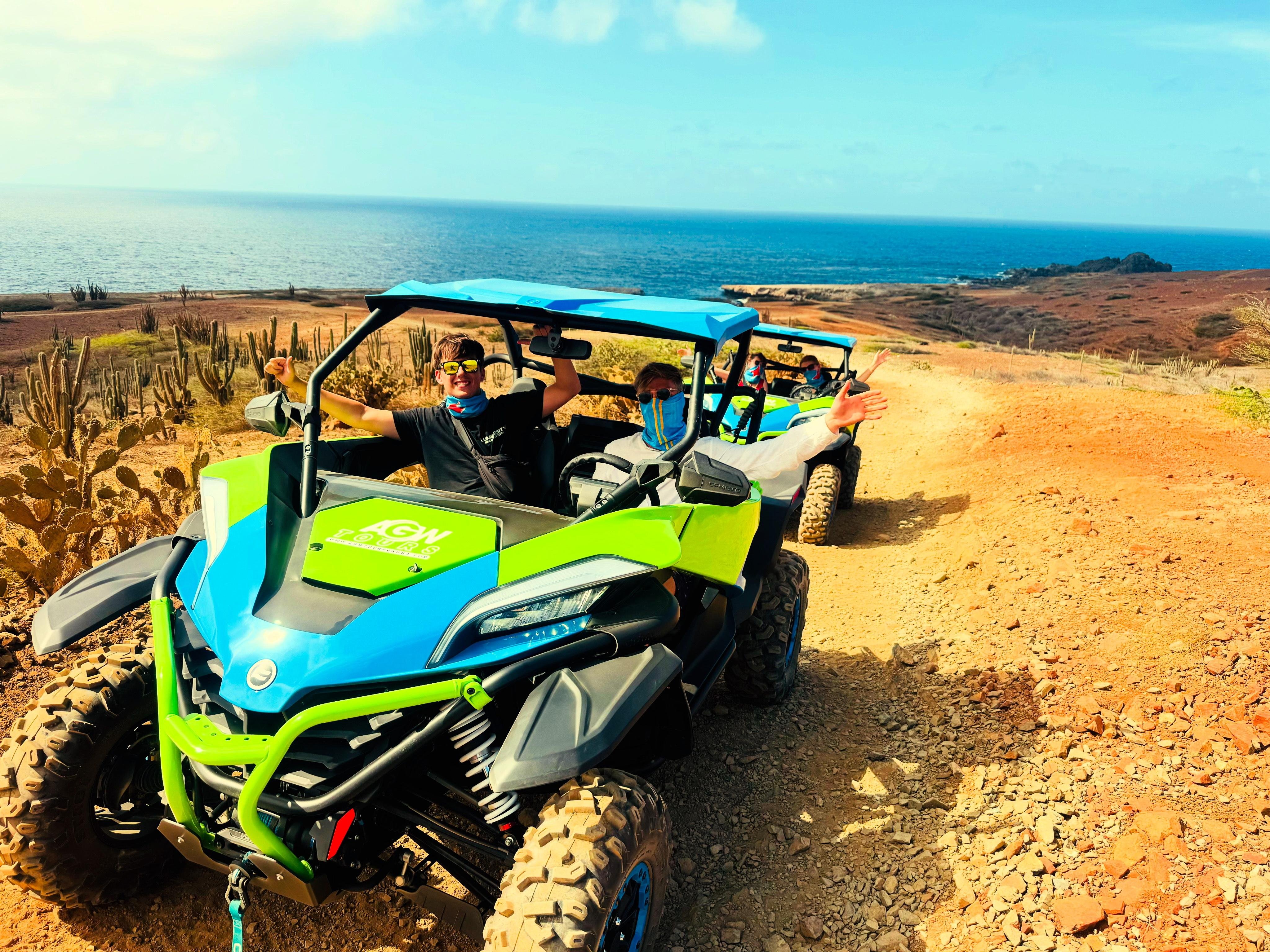
Pilot your own all-terrain vehicle through Aruba's rugged landscapes and secret coastal gems
4.5 hours
Free Cancellation
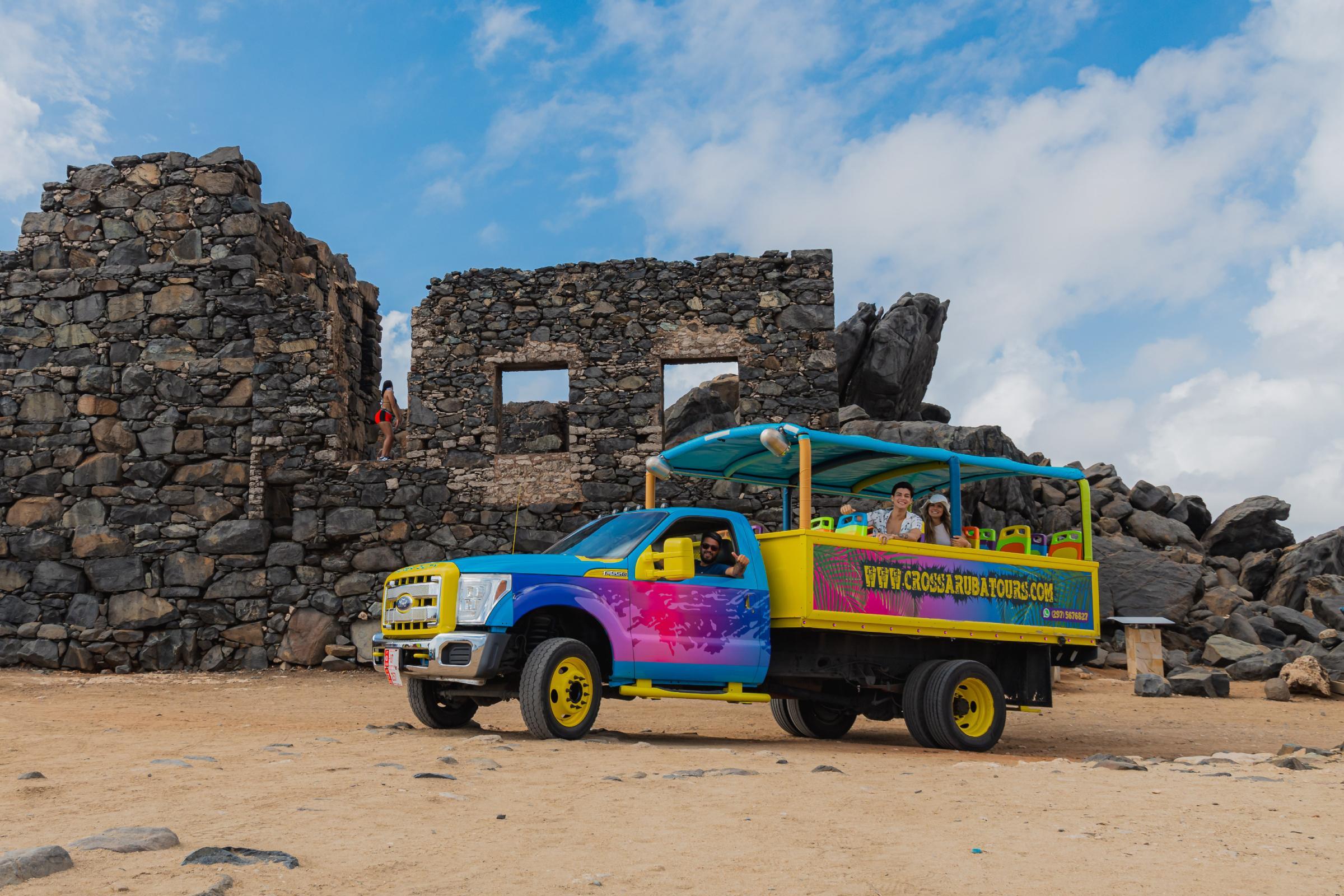
Explore Aruba's top landmarks in half a day, from historic lighthouses to pristine swimming spots
4 hours
Free Cancellation
Half-day sailing adventure with three snorkel stops including a historic WWII shipwreck site
4.5 hours
Free Cancellation
Luxury catamaran voyage with gourmet lunch, reef snorkeling, and unlimited premium drinks
Travel from the shore to the designated snorkel site.
On-board orientation regarding currents and site rules.
Guided exploration of the aruba antilla shipwreck snorkel.
Boat trip back to the primary harbor.
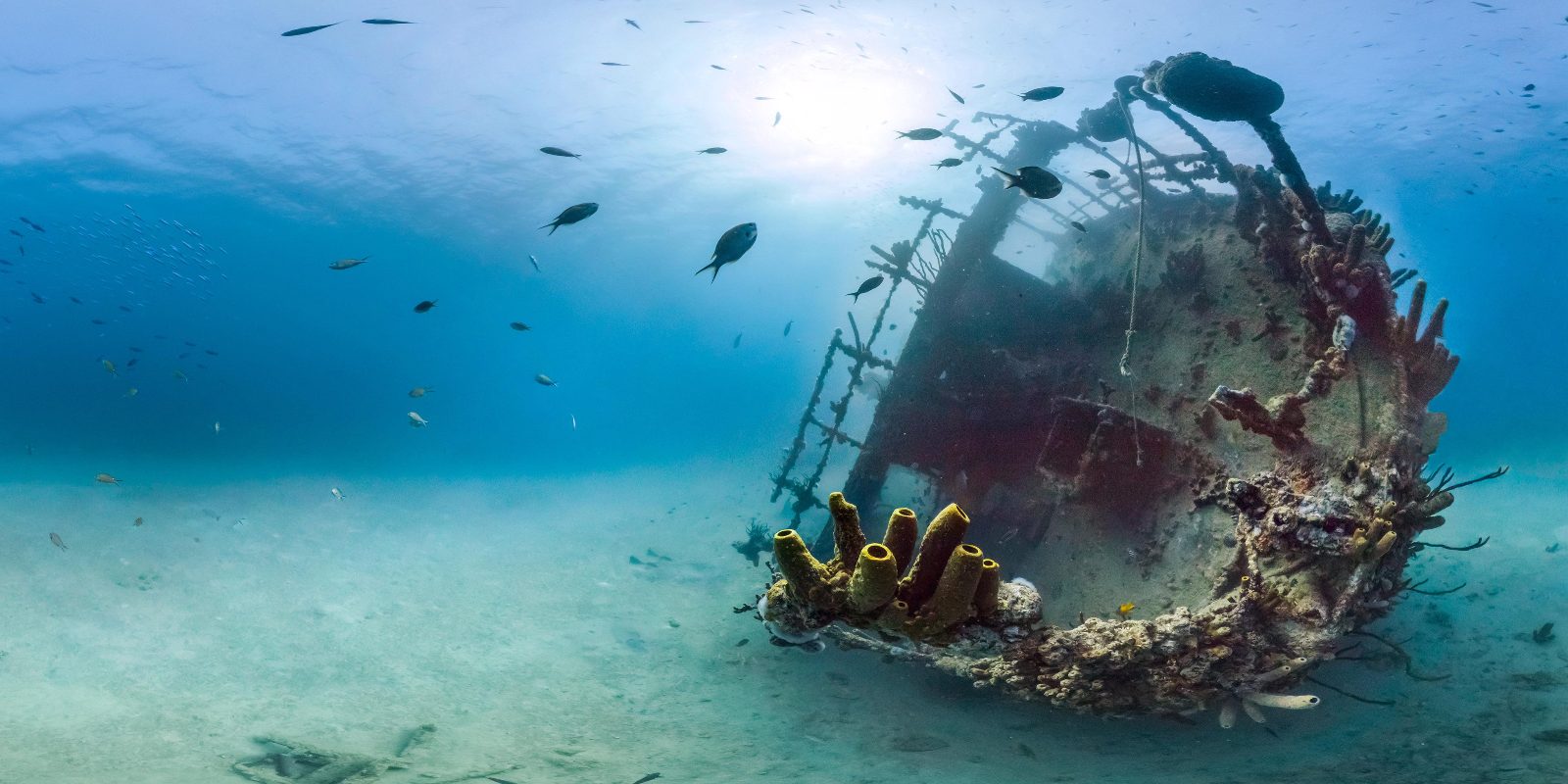
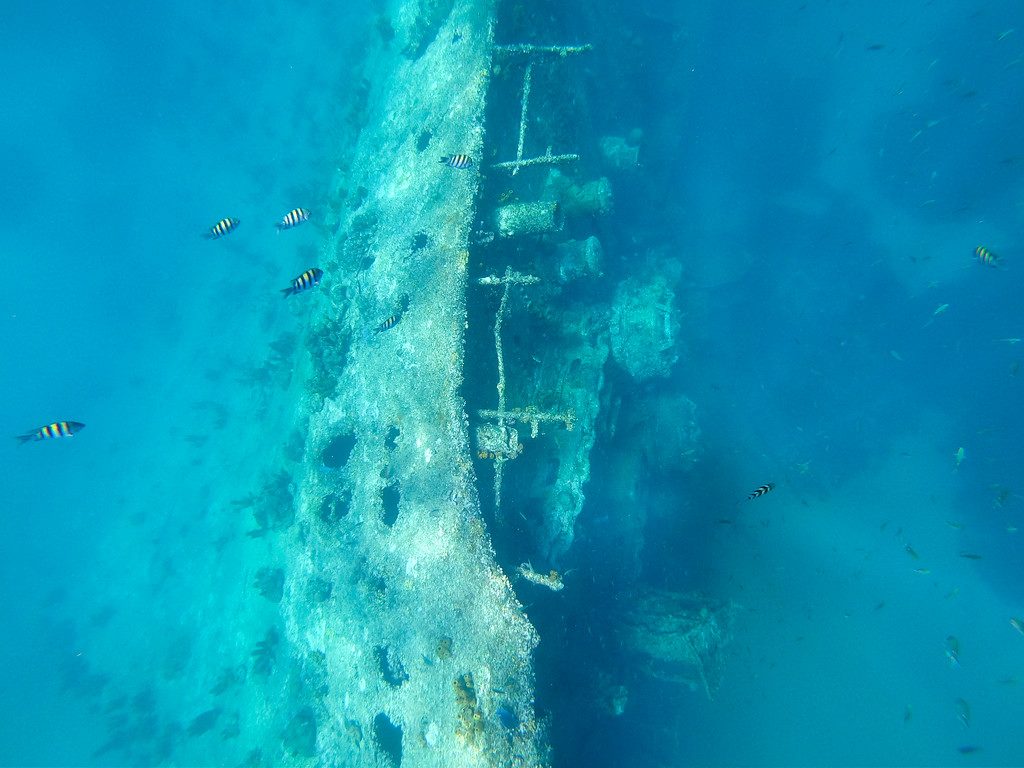
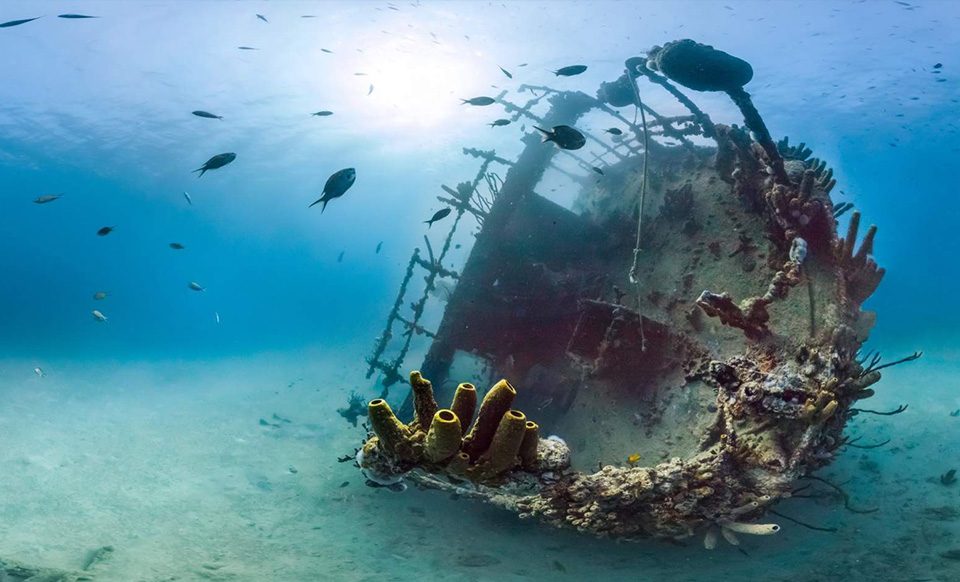
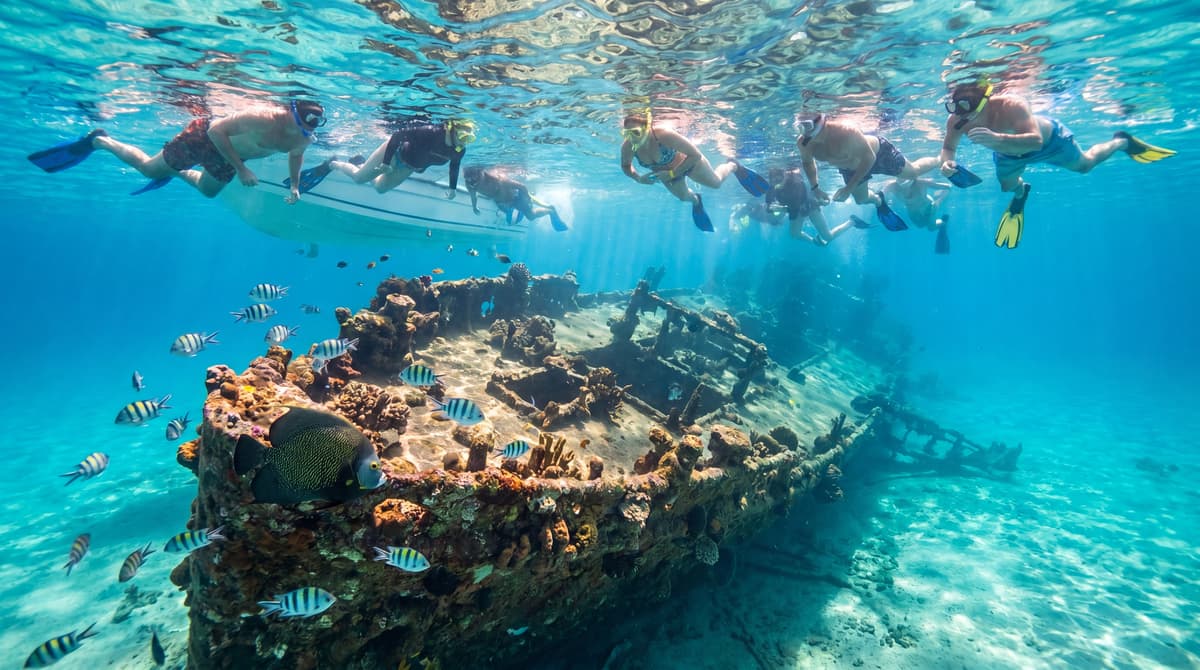
The massive steel hull of this WW2 Shipwreck remains partially visible near the surface.
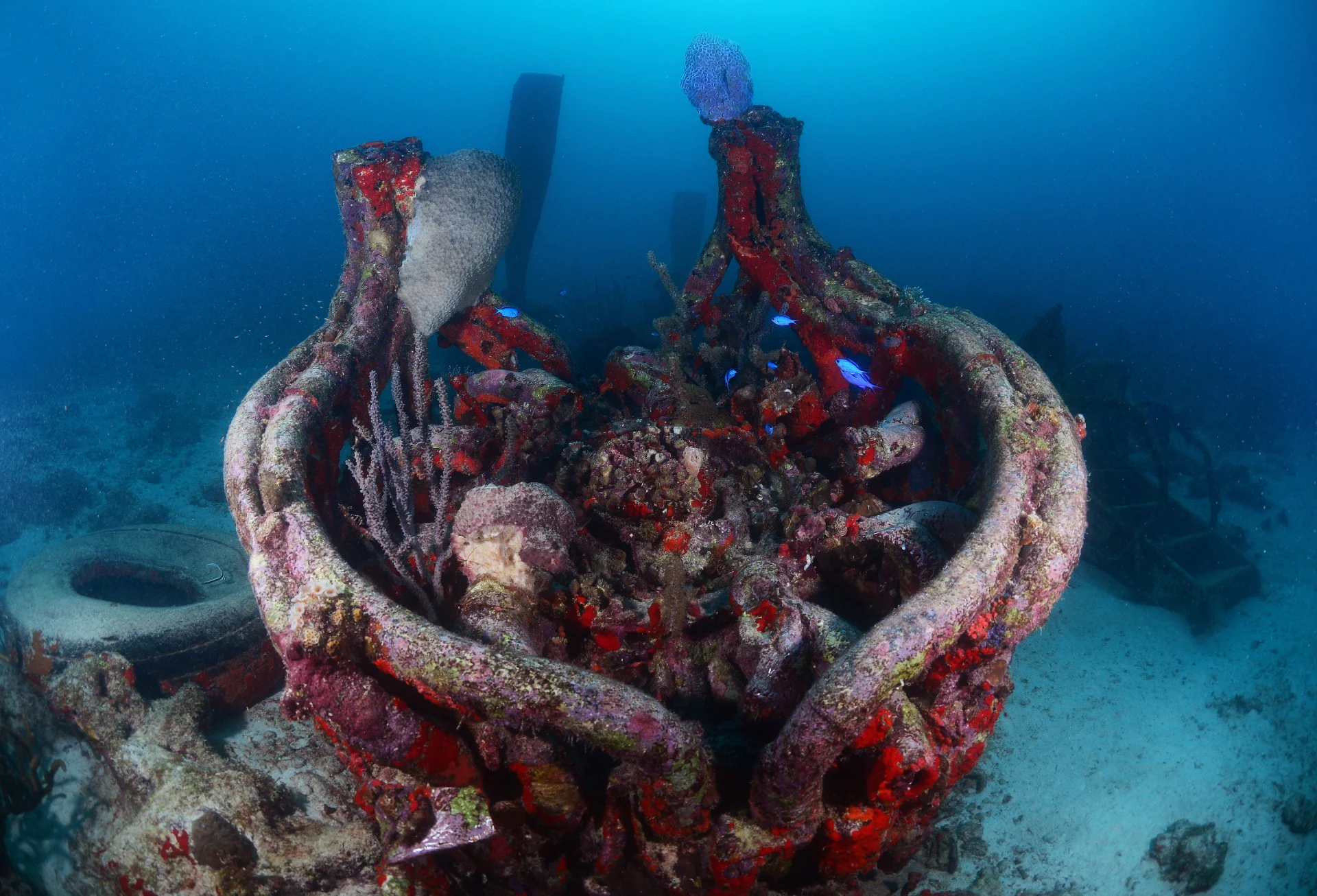
Divers and snorkelers often view the massive propeller blades at the stern of the vessel.
The central sections allow for viewing of the internal machinery of the WW2 Shipwreck.
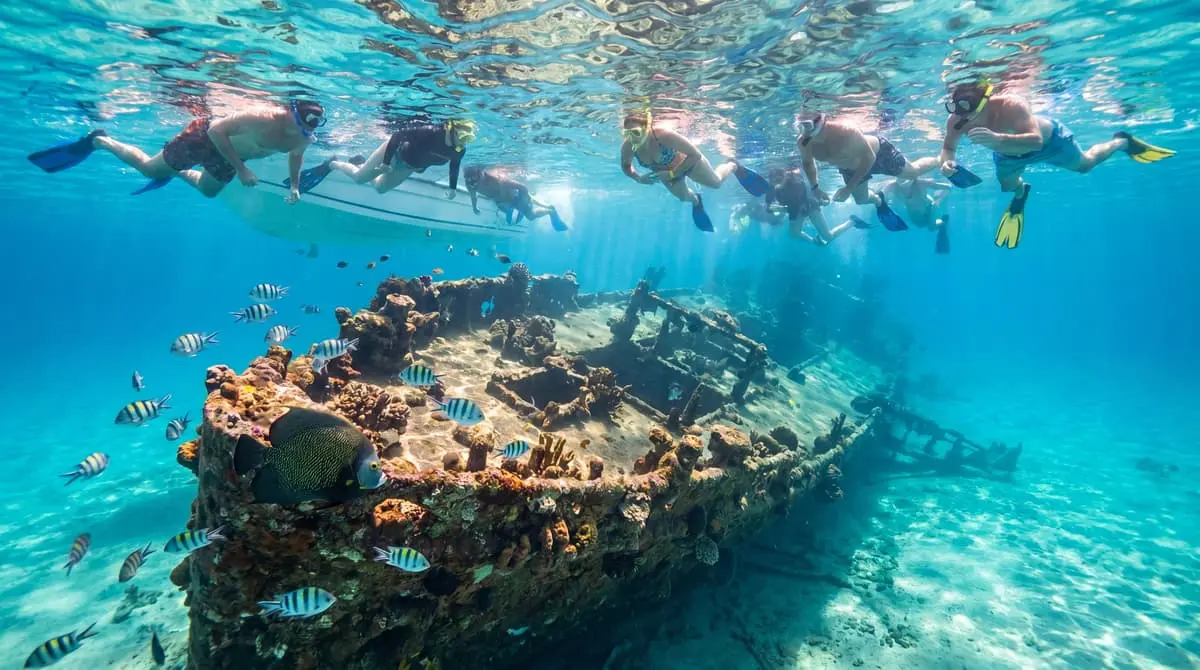
Schools of tropical fish frequently inhabit the sheltered areas of the sunken ship.
The upper deck area of the ship provides a shallow point for snorkelers to observe the ruins.
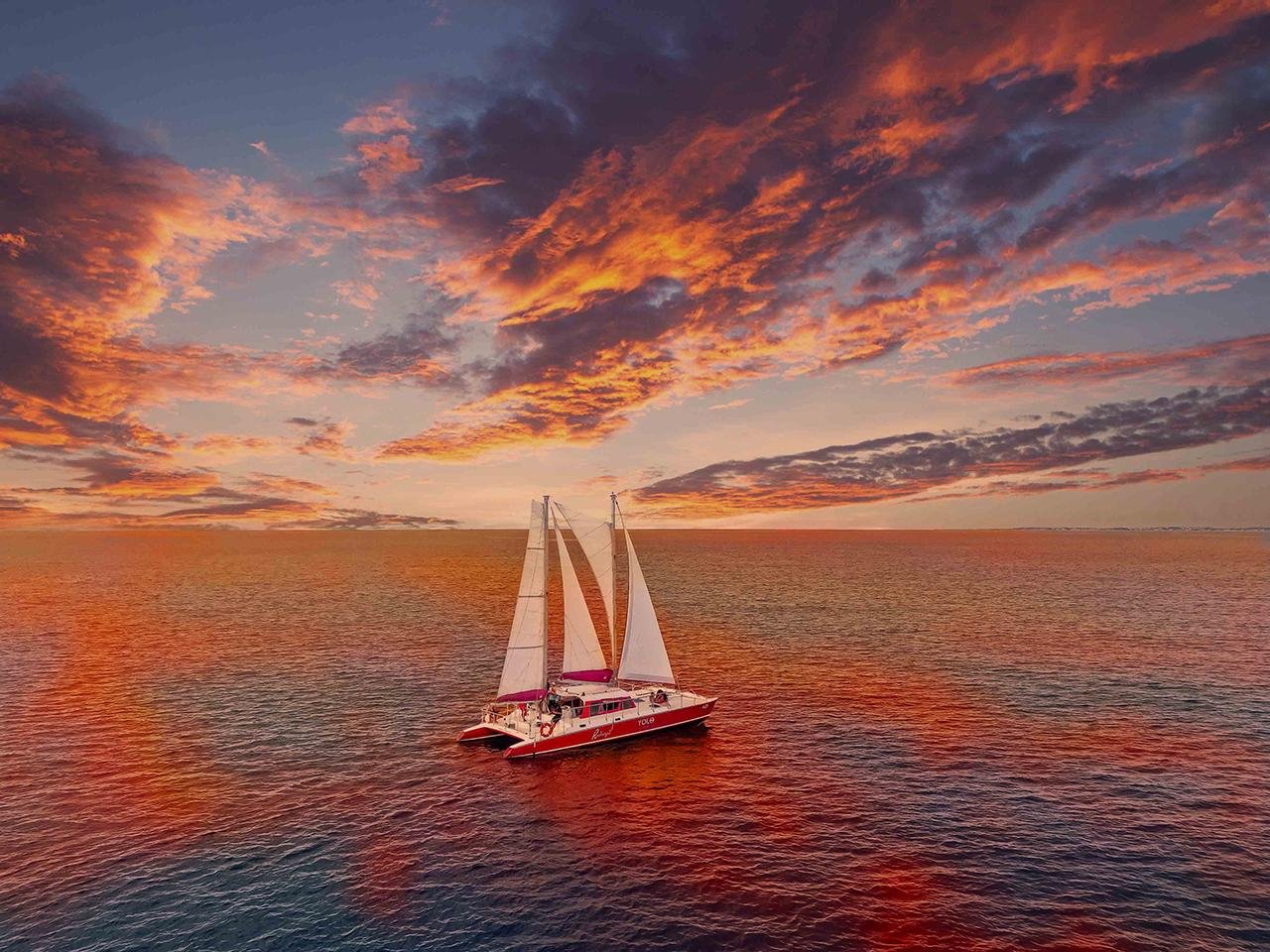
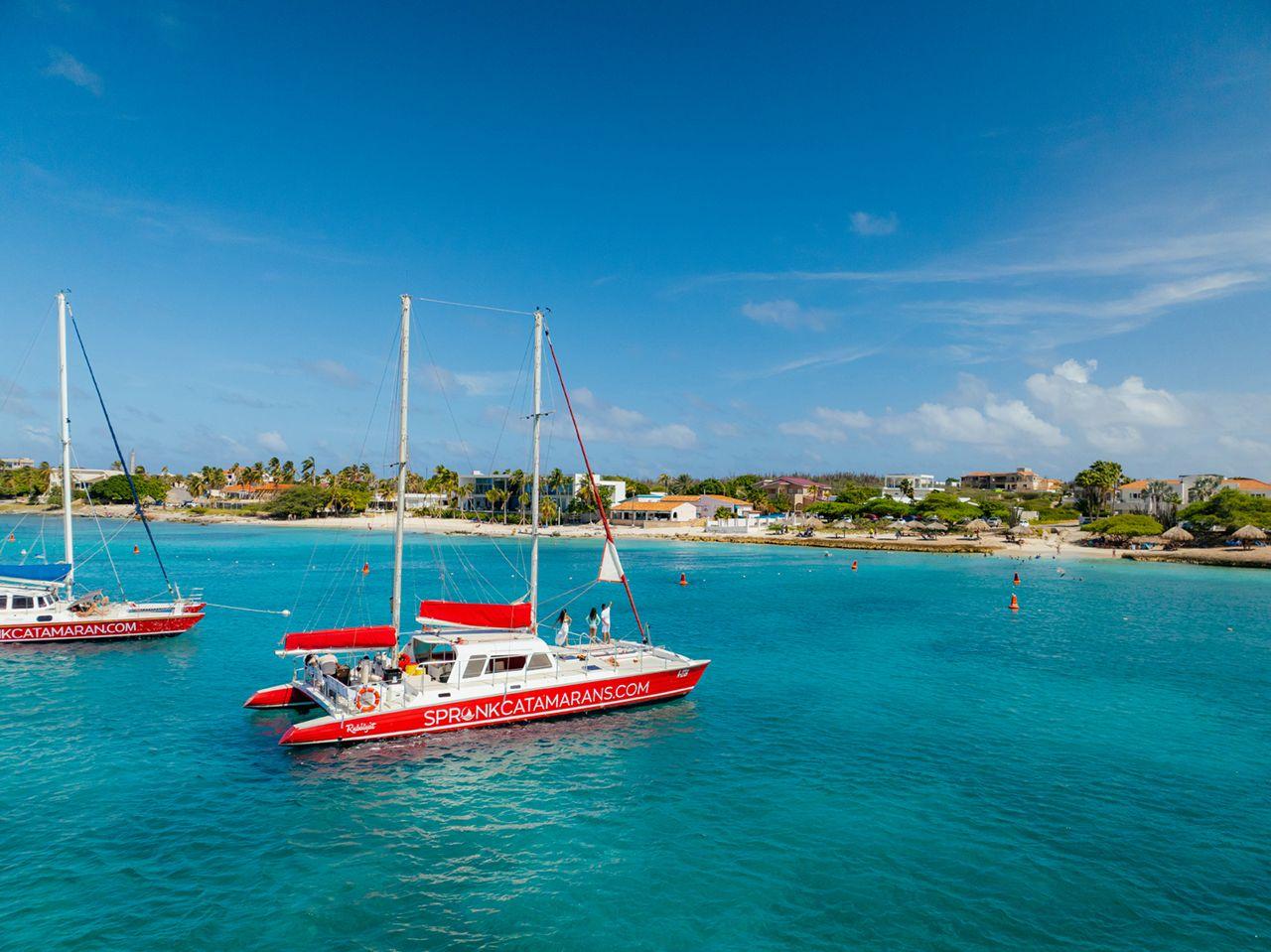
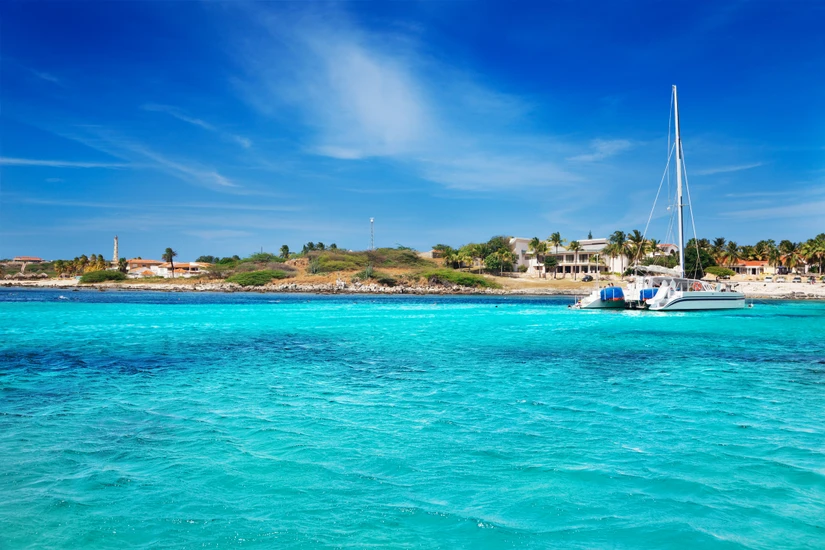
You board the catamaran at Palm Beach Marina just after dawn, when the northwest coast still holds its morning calm. The captain motors past the high-rise hotels of Eagle Beach, then cuts the engine three hundred meters offshore at Malmok Bay.
Below the hull, the Antilla's dark silhouette resolves through twenty meters of visibility—her bow angled toward the beach, her smokestacks collapsed across the midship deck.
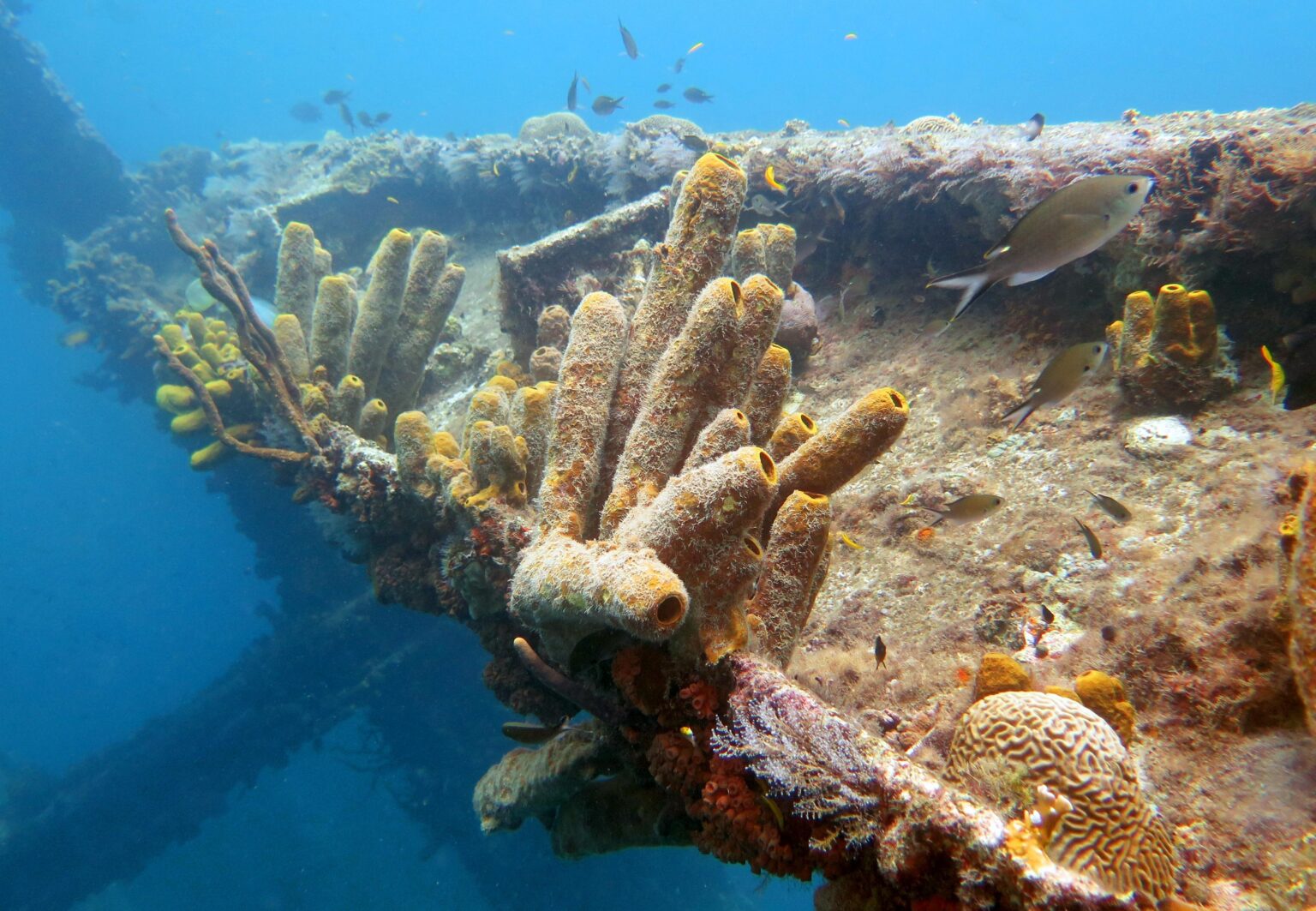
You slip into eighty-degree water and kick toward the wreck's starboard railing, now encrusted with orange cup coral and purple sea fans. Small sergeant majors dart through the cargo hold openings; a hawksbill turtle surfaces near the stern before descending into the engine room. You circle the bow, where the anchor chain still trails into the sand, then drift over the boiler section, its rusted pipes forming a lattice beneath you.
The guide signals when thirty minutes have elapsed. You return to the catamaran's swim platform, rinse your mask, and accept a towel as the boat repositions for a second drift along the wreck's port side. By ten o'clock you are back at the marina, the Antilla receding into the blue behind you.
All the details about your upcoming adventure in one place
The SS Antilla sits in eighteen meters of water off Aruba's northwest coast, her 122-meter hull split into three sections by eight decades of tide and coral colonization.
Scuttled by her German crew on May 10, 1940—hours after the Netherlands declared war on Germany—the Hamburg-Amerika Line freighter remains the largest diveable shipwreck in the Caribbean, her cargo holds still stacked with cement bags bound for German installations in Curaçao that never arrived.
Today the Antilla functions as an artificial reef visible from the surface in Malmok Bay's gin-clear water. Brain coral and elkhorn clusters have overtaken her deck railings; French angelfish and yellowtail damselfish patrol her boiler rooms. The wreck lies close enough to shore that snorkelers can circle her bow and midship sections without specialized equipment, though free-diving the cargo holds requires certification and calm conditions. Marine biologists from the University of Aruba documented 127 reef fish species living within the wreck structure in a 2024 census, making the site a biodiversity anchor for Aruba's northern coast.
Aruba Antilla shipwreck snorkel tours depart from Palm Beach and Hadicurari Pier seven mornings per week, ferrying visitors aboard catamarans equipped with snorkel gear and guided briefings. Operators anchor thirty meters from the wreck's starboard side, allowing swimmers to approach the bow at their own pace. Visibility averages twenty-five meters between April and November; December through March sees occasional swells that reduce clarity to fifteen meters. The wreck's shallowest point—her port-side railing—rests four meters below the surface, accessible to confident swimmers without descent training.
Conservation protocols established by Aruba's Marine Park Authority in 2019 prohibit touching the wreck structure or removing debris, violations enforced by on-site rangers during peak visitation hours between eight and eleven each morning. The site requires no entrance fee, though access remains limited to commercial tour vessels holding valid permits—private boats may not anchor within the restricted perimeter marked by yellow buoys.
The Antilla remains the largest diveable shipwreck in the Caribbean, her cargo holds still stacked with cement bags bound for installations that never received them.
Visitors should wear swimwear and sun-protective clothing suitable for an aruba antilla shipwreck snorkel. A rash guard is recommended for skin protection against sun and saltwater exposure.
Space on tour vessels is restricted, so only small dry bags are permitted for an aruba antilla shipwreck snorkel. Please leave valuables at your accommodation.
Underwater cameras are ideal for documenting an aruba antilla shipwreck snorkel. Ensure your equipment is properly secured to avoid loss in the open water.
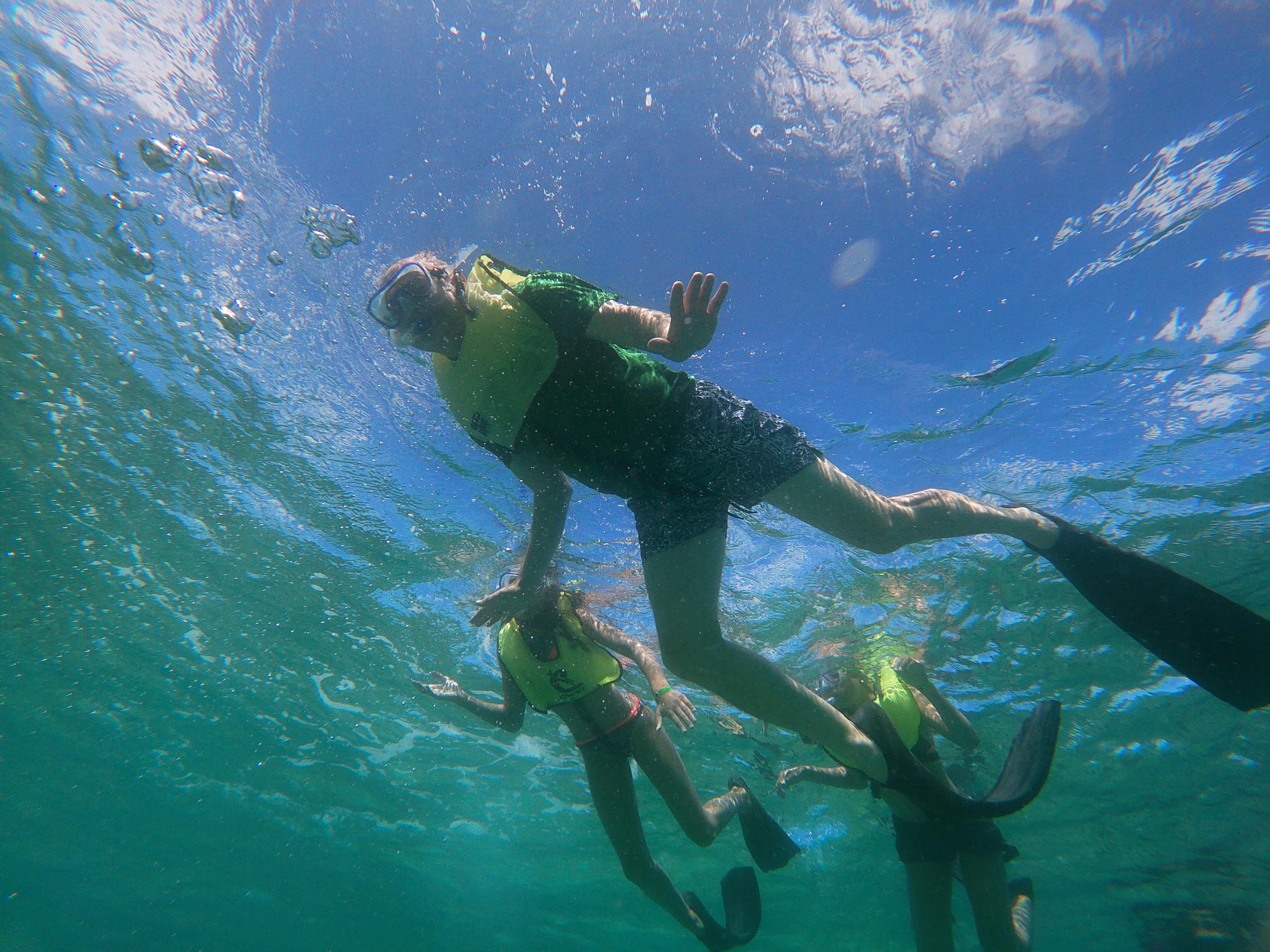
Children are welcome on many aruba antilla shipwreck snorkel tours if they are strong swimmers. Life vests are provided and must be worn by all participants.
Access to the submerged structure requires jumping from a boat and swimming in the open ocean. This activity is not suitable for individuals with limited mobility.
Consumption of food is typically restricted on the water to maintain ocean hygiene. Please store personal water bottles securely during your aruba antilla shipwreck snorkel.
Opening Hours
00:00–23:59
Address
Malmok Bay, Aruba
Site Access
Boat tour only
Best Window
07:00–11:00
Storage
Not available on vessels
Navigation
GPS coordinates required
Taxi · 15 min · Variable based on location.
Most reliable method to reach piers from resorts.
Car · 20 min · Free parking at most public lots.
Ample parking near Noord, though availability varies.
Cancellations must be requested according to the specific operator policy. Since this site has an entrance fee of 0 USD, refunds apply only to booked transit services.
Recommended time
3-4 hours
A typical aruba antilla shipwreck snorkel excursion requires half a day to account for boat travel time from the shore to the Malmok Bay site. While the wreck itself is accessible at any hour, booking aruba antilla shipwreck snorkel tours during the recommended morning window ensures optimal water visibility before afternoon trade winds increase current strength. Most aruba antilla shipwreck snorkel tickets include gear and transit, so you should plan for the total transit time rather than just time in the water near the submerged hull. Visitors often find that midday, when multiple catamarans arrive, creates the highest congestion at this Aruba landmark.
Crowd levels through the day
Weather · crowds · average price — dots go green to amber to red as each metric rises.
Mild temperatures and lower wind speeds offer high water clarity.
Warm waters are ideal for extended time during an aruba antilla shipwreck snorkel.
Low tourist density allows for a quiet experience at this historical landmark.
Winds may increase, making morning arrivals essential for calm conditions.
Plan your aruba antilla shipwreck snorkel for the earliest available time to avoid wind.
Ensure your snorkel mask fits properly before leaving the dock.
Do not touch or remove any metal parts from the sunken structure.
Apply reef-safe sunscreen at least 20 minutes before entering the water.
Drink plenty of water before and after your time at sea.
Assess your comfort level with currents before booking aruba antilla shipwreck snorkel tickets.
L.G. Smith Blvd, Noord
Primary departure point for most boat operators.
Get directionsThe SS Antilla began service in 1939 as a Hamburg-Amerika Line cargo vessel, measuring 400 feet in length and displacing over 4,300 tons. Built in Hamburg for transatlantic runs, the German freighter carried general cargo between European and Caribbean ports during the final months of peace. When World War II erupted in September 1939, the Antilla found itself stranded in neutral Dutch waters off Aruba, unable to return safely to Germany. Captain Wilhelm Wegener and his crew anchored in Malmok Bay, waiting for orders that never arrived. On May 10, 1940, the Wehrmacht invaded the Netherlands, ending Dutch neutrality and forcing the Aruban authorities to act. Colonial marines surrounded the vessel at dawn, intending to seize it as enemy property. Rather than surrender the ship intact, Wegener ordered his crew to open the seacocks and set fires below deck, scuttling the Antilla in shallow water to prevent Allied use. The vessel sank within hours, settling on its port side in 60 feet of water with sections of the hull breaking the surface. The German crew rowed ashore in lifeboats and were interned for the remainder of the war. Over eight decades, the wreck transformed into an artificial reef colonized by sponges, brain coral, and fire coral. The ship's propeller, anchor chains, and boiler remain visible, while barracuda, sergeant majors, and angelfish patrol the interior compartments. Aruba antilla shipwreck snorkel tours depart daily from nearby beaches, with guides leading visitors along the starboard side where the ship lies in 15 to 60 feet of depth. Recreational divers explore the cargo holds and engine room, while snorkelers drift above the bow section in shallower water. The Antilla represents the largest accessible shipwreck in the Caribbean for non-divers, its iron skeleton now serving as a marine habitat rather than a tool of wartime commerce. The scuttling remains Aruba's most dramatic World War II event, preserving both maritime history and a thriving underwater ecosystem.
The SS Antilla enters service as a Hamburg-Amerika Line cargo freighter, operating transatlantic routes.
War erupts in Europe; the Antilla anchors in neutral Dutch Aruba, unable to return to Germany.
German forces invade the Netherlands; Aruban authorities move to seize the stranded vessel.
Captain Wegener scuttles the Antilla in Malmok Bay to prevent Allied capture; the crew is interned.
The wreck settles and begins coral colonization, transforming into an artificial reef structure.
The Antilla becomes a premier dive and snorkel site, attracting recreational divers and marine biologists.
Position yourself directly over the midsection to capture the massive steel plates and remnants of the deck structure through clear water. This perspective provides a sense of scale for the 400-foot vessel during an aruba antilla shipwreck snorkel.
Swim along the bow where schools of tropical fish congregate near the decaying metal, creating high-contrast shots against the blue Caribbean water. This area is a staple of aruba antilla shipwreck snorkel tours for capturing biodiversity.
Dive down to the stern to photograph the large propeller assembly which remains largely intact despite decades of submersion. Accessing this viewpoint often requires coordination with your guide on an aruba antilla shipwreck snorkel tour.
Capture the vast expanse of the ocean surface from the boat deck to contrast the deep wreck location with the surrounding coastline. Booking aruba antilla shipwreck snorkel tickets allows for these topside perspective shots between dives.
Planning an aruba antilla shipwreck snorkel excursion requires coordinating boat transport, as the site is located offshore at Malmok Bay. Families should prepare for a deep-water experience where children need comfort with snorkeling gear and ocean currents.
Strollers cannot be used on the boat tours required to reach this site, so bring a lightweight carrier for infants if necessary.
This activity is best suited for confident swimmers aged eight and up who can manage open-water snorkeling with adult supervision.
There are no onboard changing tables or restrooms on most small excursion vessels, so prepare children before leaving the dock for your aruba antilla shipwreck snorkel tour.
The best arrival window is 07:00–11:00 to ensure your family enjoys the calmest water conditions before the wind picks up.
Consider booking aruba antilla shipwreck snorkel tours that provide child-sized life vests and masks to ensure a proper fit for younger participants.
Always verify that your aruba antilla shipwreck snorkel tickets include a certified guide who can monitor children near the submerged hull.
Since there are no facilities at the Malmok Bay site, travelers often head to nearby Palm Beach after finishing their aruba antilla shipwreck snorkel excursion. These coastal venues offer convenient dining options for those returning from their aruba antilla shipwreck snorkel tours.
Located directly on the water, this spot serves fresh catch and local Caribbean dishes. It is a favored stop for groups finishing an aruba antilla shipwreck snorkel tour who want a relaxed seaside meal.
Situated above the pier, this venue offers casual bites and cold drinks with a view. It serves as a popular post-dive location for those who have secured their aruba antilla shipwreck snorkel tickets online.
This pier-based restaurant is a staple for visitors exploring various Aruba landmarks. The menu features international favorites, making it a reliable choice for refueling after water activities.
Everything you need to know for your journey
The site is accessible 00:00–23:59 daily, though boat access determines your specific visit time.
You should purchase aruba antilla shipwreck snorkel tickets through authorized local boat operators.
It is suitable for those who are confident in the water, as the site requires open-ocean swimming.
Bring a towel, waterproof camera, and sun protection for your aruba antilla shipwreck snorkel.
Arrive between 07:00–11:00 for the best water conditions at the shipwreck site.
Many local operators offer private charter options for an aruba antilla shipwreck snorkel experience.
Most operators require children to be strong swimmers, though no strict age limit is set by the site.
There is an entrance fee of 0 USD, but transit costs apply for boats reaching the location.
You must reach the site by boat from designated piers like Hadicurari.
Refer to your operator's specific cancellation policy regarding weather-related service adjustments.
A popular beach known for calm swimming conditions.
A historic stone lighthouse offering panoramic coastal views.
A quiet beach often used as a stop for snorkeling tours.
High-end hotels with direct access to water transport.
Smaller properties located close to departure points.
Central city location near the primary harbor.
Join thousands of happy travelers who have discovered this incredible experience
Book Your Experience Now